


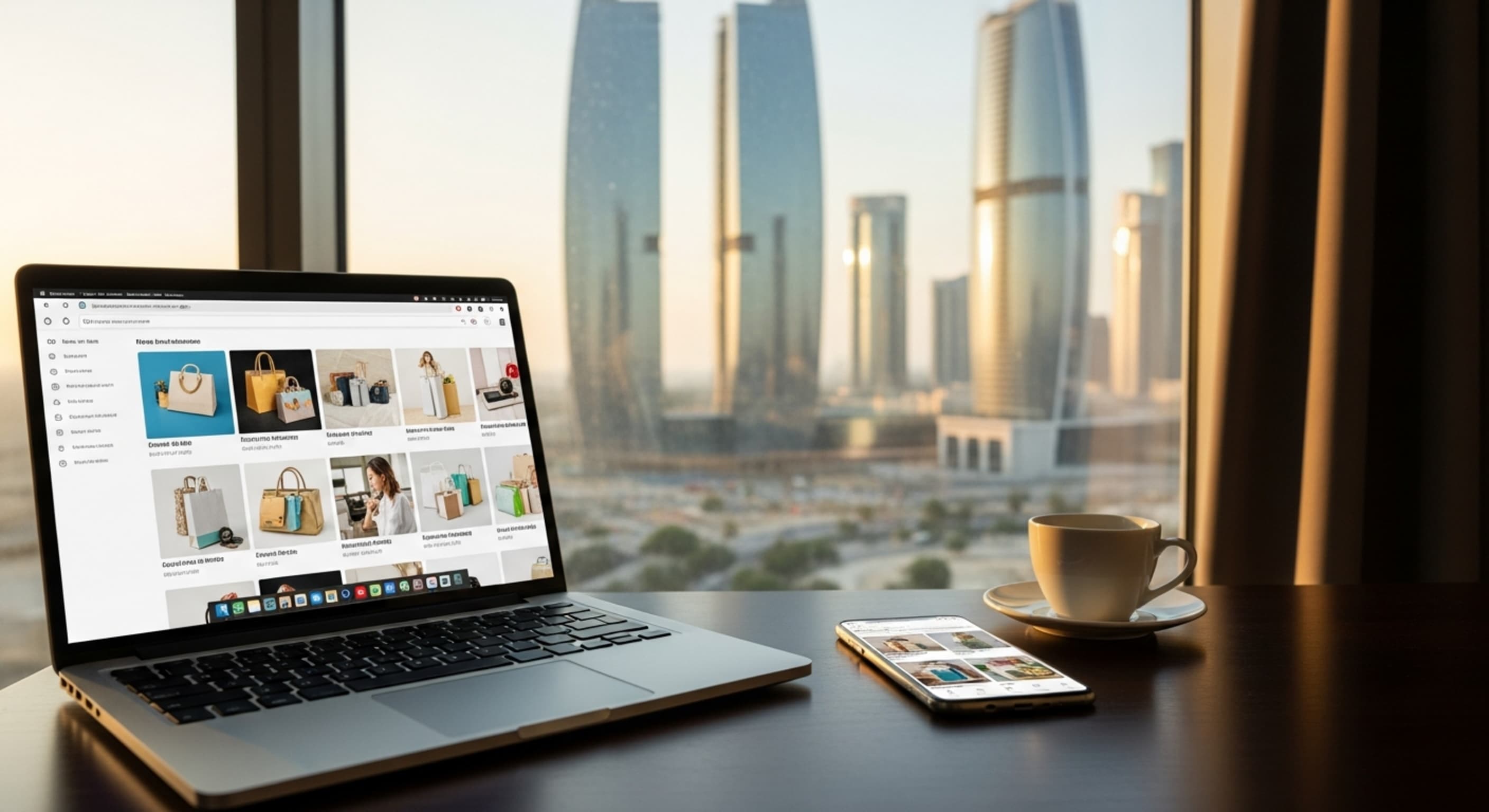
Walk into any mall in Dubai Mall or Riyadh Park and the foot traffic looks healthy. But the real action is happening on phones. Nearly 80% of consumers in the UAE and Saudi Arabia now use AI-powered shopping assistants for product recommendations and price comparisons. That's not a forecast. That's the current state of play.
The Middle East e-commerce market is on track to clear $50 billion in gross merchandise value this year, and AI-driven personalization is the engine behind the growth. If you're running an online store targeting Gulf consumers and you're still serving the same homepage to everyone, you're leaving serious money on the table.
$50-60B Projected Middle East e-commerce GMV for 2026, with Saudi Arabia alone accounting for $20-25 billion. (Statista, eCommerce Middle East 2026)
The Personalization Gap Most MENA Stores Ignore
Here's what separates the stores that are growing from the ones treading water. The growing ones aren't just using AI to recommend "customers also bought." They're using it to rebuild the entire shopping experience around each visitor.
That means dynamic pricing adjusted in real time based on demand patterns during Ramadan flash sales. Product discovery that adapts to whether someone is browsing from Doha at midnight or Beirut on a lunch break. Messaging that switches between Arabic and English based on behavior, not just browser settings.
Al-Futtaim's Blue AI assistant, for example, handles personalized shopping tasks across their entire retail ecosystem. Dubai-based DXwand raised $4 million specifically to build multilingual conversational AI for customer engagement in the region. These aren't side projects. They're core strategy.
| Market | 2026 E-commerce GMV | Key Opportunity |
|---|---|---|
| Saudi Arabia | $20-25B | Largest market. Young population (70% under 35). Vision 2030 driving digital payments adoption. |
| UAE | $12-14B | Highest per capita spend. Dubai as logistics hub. 99% internet penetration. |
| Qatar | $2-3B | Highest GDP per capita globally. Post-World Cup digital infrastructure. Hyperlocal platforms growing fast. |
| Lebanon | $300-500M | Smaller but resilient. Strong tech talent. Cross-border shopping increasingly popular. |
What AI Personalization Actually Looks Like in Practice
Forget the vague "AI-powered recommendations" pitch. Here's what effective implementation looks like for a MENA e-commerce store:
Behavioral product discovery. Instead of category pages, AI analyzes a shopper's browsing history, purchase patterns, and even time of day to surface products they're most likely to buy. A returning customer who always buys abayas during sale periods gets early access notifications. Someone who browses electronics but never buys gets a different trigger, maybe a comparison tool or a limited-time bundle.
Arabic-first conversational commerce. This is where most global AI tools fall flat. Gulf Arabic, Levantine Arabic, and Modern Standard Arabic aren't interchangeable. A chatbot that works in MSA but can't handle "shu hal deal?" is useless in a Beirut context. The platforms winning in MENA are fine-tuning language models on regional dialects.
Ramadan and seasonal intelligence. The shopping calendar in the Gulf is different from the West. Ramadan, Eid al-Fitr, Saudi National Day, Qatar National Day: each drives distinct purchasing behavior. AI systems that recognize these patterns and pre-adjust inventory, pricing, and marketing outperform those that react manually.
40% higher revenue for companies using AI personalization versus those that don't. 91% of consumers prefer brands that recognize and remember them. (eMarketer/Publicis Sapient, 2026)
Mobile Commerce Is the Default. Act Accordingly.
Mobile commerce accounts for 70% of transaction values across the Gulf. Digital wallets handle 20% of online spending. This isn't a "mobile-first" suggestion. It's the reality of how people in Riyadh, Dubai, Doha, and Beirut actually shop.
That means your AI personalization strategy can't be an afterthought bolted onto a desktop experience. It has to be native to mobile. Fast load times, touch-optimized interactions, seamless payment integrations with local wallets like STC Pay and Apple Pay.
How Hellotree Builds Personalized E-commerce
We build e-commerce platforms with AI personalization baked in from day one, not added as a plugin later. From UX research that maps real user behavior in each market to AI integration that handles recommendation engines and conversational commerce, we design for how Gulf consumers actually shop.
The gap between a generic online store and one that feels like it knows you? That's where conversions happen. And in a market growing this fast, the stores that personalize first will own the customer relationship.
Building e-commerce for the Gulf market? Let's build something that converts.
References
- Statista, "eCommerce Middle East" database, 2025-2026 editions — statista.com
- OpenPR, "Middle East E-Commerce Market Size to Hit USD 10.957 Billion" (2026) — openpr.com
- eMarketer, "FAQ on Retail Technology: AI's Role Reshaping Commerce" (2026) — emarketer.com
- Google/Statista, "MENA Digital Economy Projections" — $125 billion projected by 2026
- Publicis Sapient, "Retail AI Personalization Guide" (2026) — genaiembed.ai


